
Professional Guide to Cobalt Supplementation in Reef Aquariums
Cobalt represents one of the most biochemically critical yet analytically challenging trace elements in reef aquarium management, existing at ultra-low concentrations that frequently fall below detection limits while serving as the central component of vitamin B₁₂ synthesis. At natural seawater concentrations of 0.03-0.07 μg/L (30-70 picomolar), cobalt enables essential metabolic processes through bacterial cobalamin production, making daily supplementation necessary despite often reading as “zero” on ICP tests.
Understanding Cobalt’s Unique Role in Marine Biochemistry
Natural Seawater Concentrations and Analytical Challenges
Cobalt occurs naturally in seawater at extremely low concentrations ranging from 0.03-0.07 μg/L (30-70 picomolar), making it one of the least abundant essential trace elements in marine systems. This concentration represents approximately 500 billion times less abundant than sodium, illustrating the ultra-trace nature of this critical element. The analytical challenge is compounded by the fact that only a small fraction exists as bioavailable Co²⁺, with most cobalt bound to organic ligands or existing in less available oxidation states.
Research demonstrates significant geographic variation in cobalt concentrations, with open ocean values typically ranging from 25-45 pM and coastal waters showing elevated levels up to 103 pM due to terrestrial inputs. The vertical distribution shows characteristic nutrient-like profiles, with surface depletion and intermediate water maxima around 200m depth. This natural variability, combined with analytical detection limits often exceeding natural concentrations, makes cobalt one of the most challenging trace elements to monitor accurately in reef aquarium systems.
Chemical Speciation and Bioavailability
In marine environments, cobalt exists predominantly as divalent (Co²⁺) and trivalent (Co³⁺) species, with the divalent form being more bioavailable for biological uptake. Research indicates that over 90% of dissolved cobalt in seawater exists complexed with organic ligands, with conditional stability constants ranging from 15.6-16.1. These strong organic complexes maintain cobalt in solution but may limit its immediate bioavailability, creating conditions where free Co²⁺ concentrations fall to femtomolar levels.
The bioavailable fraction represents only a small percentage of total dissolved cobalt, with studies showing that ligand concentrations often exceed total cobalt concentrations in surface waters. This excess ligand capacity suggests that cobalt availability rather than binding capacity limits biological uptake in many marine environments. For reef aquarium supplementation, cobalt(II) sulfate heptahydrate (CoSO₄·7H₂O) provides readily bioavailable cobalt that can be rapidly incorporated into biological systems.
Biological Functions and Vitamin B₁₂ Synthesis
Central Role in Cobalamin Production
Cobalt’s primary biological function centers on its role as the central coordinating metal in vitamin B₁₂ (cobalamin), where it forms the reactive center of this essential biomolecule. The synthesis of cobalamin occurs exclusively in prokaryotic organisms, including bacteria associated with coral mucus secretions. Research demonstrates that bacterial populations in coral mucus can reach densities 100 times higher than surrounding seawater, with vitamin B₁₂ concentrations up to 350 times higher than ambient levels.
Studies on coral-associated bacteria reveal sophisticated cobalamin production systems that support both coral and zooxanthellae metabolism. The bacterial community within coral mucus serves as a concentrated source of vitamin B₁₂, which diffuses into coral tissues and supports essential cellular processes including DNA synthesis, cellular division, and metabolic enzyme function. This bacterial production system explains why coral health can deteriorate rapidly when cobalt availability becomes limiting.
Metabolic Functions in Coral Physiology
Vitamin B₁₂ serves essential functions in coral cellular metabolism, particularly in DNA synthesis and cellular division processes. The vitamin acts as a cofactor for enzymes involved in methionine synthesis, folate metabolism, and fatty acid oxidation. These metabolic pathways are particularly critical during periods of rapid coral growth and tissue regeneration.
Research indicates that adequate cobalt availability supports optimal zooxanthellae function through enhanced vitamin B₁₂ production. The symbiotic algae require cobalamin for various metabolic processes, including chlorophyll synthesis and carbon fixation efficiency. Studies show that cobalt deficiency can lead to reduced photosynthetic efficiency and compromised coral-algae symbiosis.
Aquarium Applications and Management Protocols
Target Concentrations and Detection Reality
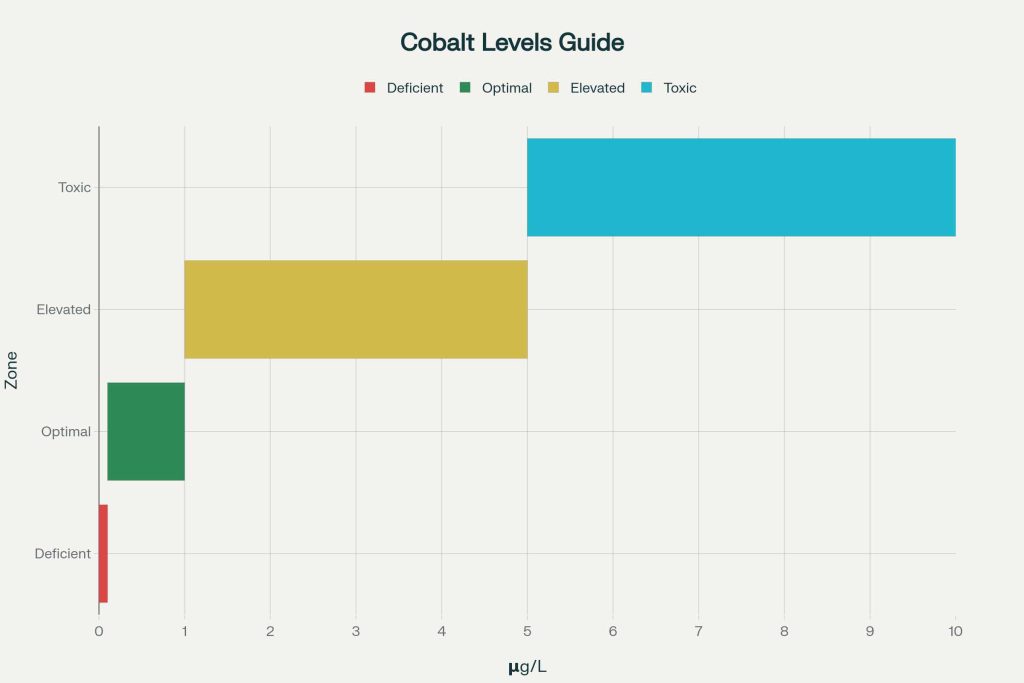
Reef aquarium cobalt levels should be maintained within the 0.1-1.0 μg/L range to ensure adequate vitamin B₁₂ synthesis while avoiding toxicity. However, like chromium, cobalt management faces significant analytical challenges, with ICP tests frequently returning “zero” or “below detection limit” results even with active supplementation. This detection limitation occurs because cobalt consumption by bacterial communities often exceeds supplementation rates, particularly in systems with active coral populations.
The recommended aquarium range significantly exceeds natural seawater concentrations, reflecting the need to overcome rapid biological uptake and maintain adequate bioavailability. Research suggests that coral-associated bacteria can rapidly sequester available cobalt for cobalamin synthesis, requiring continuous supplementation to maintain measurable levels. This biological demand explains why cobalt levels often remain undetectable despite regular dosing.
Daily Dosing Protocols and Administration
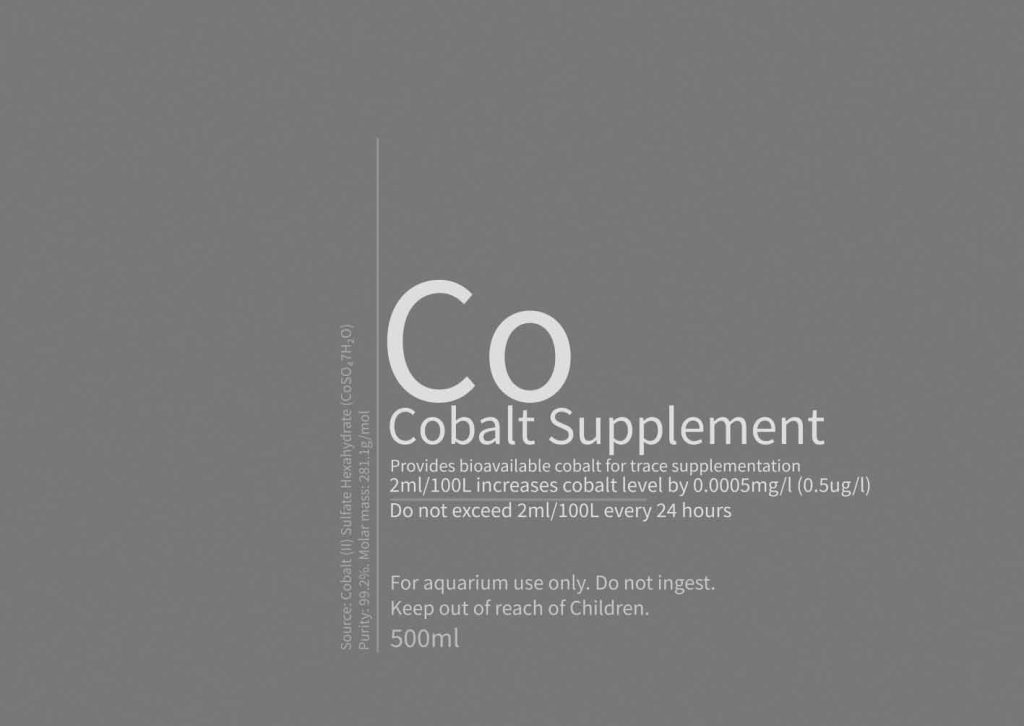
Based on the provided cobalt(II) sulfate heptahydrate formulation with molecular weight 281.1 g/mol, the dosing protocol follows these parameters:
- Stock Solution: CoSO₄·7H₂O (CAS 10026-24-1)
- Dosing Rate: 2 mL per 100L increases cobalt by 0.0005 mg/L (0.5 μg/L)
- Maximum Safe Daily Dose: 2 mL per 100L
- Recommended Range: 0.1-1.0 μg/L
- Dosing Frequency: Daily administration required due to rapid biological uptake
The daily dosing requirement reflects cobalt’s rapid incorporation into bacterial metabolic processes and the continuous demand for vitamin B₁₂ synthesis. A typical 400L reef system requires 8 mL of stock solution daily to maintain adequate cobalt availability, despite ICP tests potentially showing undetectable levels.
This consistent approach ensures continuous vitamin B₁₂ production to support coral health.
Practical Implementation and Biological Monitoring
Cobalt supplementation should be administered during periods of peak bacterial activity, typically during evening hours when organic matter release from coral feeding is highest. The supplement can be dosed directly into high-flow areas to ensure rapid distribution, though the small volumes involved require precise dosing equipment. Many successful reef aquarists use automated dosing systems to deliver small, consistent doses throughout the day.
Biological monitoring becomes essential for cobalt management due to analytical limitations. Improved coral growth rates, enhanced tissue expansion, and increased resistance to bacterial infections serve as primary indicators of adequate cobalt availability. Conversely, poor growth rates, increased susceptibility to tissue necrosis, and reduced feeding responses may indicate cobalt deficiency despite adequate major element parameters.
Safety Considerations and Toxicity Management
Marine Organism Sensitivity and Toxicity Thresholds
Cobalt toxicity represents a significant concern due to the element’s potent biological activity and the narrow margin between therapeutic and toxic concentrations. Research demonstrates that marine organisms show varying sensitivity to cobalt exposure, with red algae being among the most sensitive at chronic effect concentrations of 1.23 μg/L. This toxicity threshold lies close to recommended supplementation levels, requiring careful dosing protocols and regular monitoring.
Studies on coral responses to cobalt exposure reveal complex dose-dependent effects. At concentrations around 0.2 μg/L, moderate stimulation of photosynthetic processes occurs, likely due to enhanced carbonic anhydrase activity and increased vitamin B₁₂ production. However, concentrations exceeding 1.0 μg/L can cause significant reductions in calcification rates and photosynthetic efficiency. These findings emphasize the importance of maintaining cobalt levels within the optimal range.
Species-Specific Responses and Bioaccumulation
Marine fish demonstrate higher tolerance to cobalt exposure compared to invertebrates, with behavioral avoidance responses occurring at concentrations around 24 μg/L. However, chronic exposure studies reveal that cobalt can cause oxidative stress, tissue damage, and altered gene expression at concentrations well below acute toxicity thresholds. The bioaccumulation of cobalt in marine organisms, particularly in gill tissues, can lead to long-term physiological disruptions.
Research on coral species reveals varying sensitivity to cobalt exposure, with branching corals generally showing greater sensitivity than massive species. Acropora species demonstrate growth reductions of 28% at concentrations of 0.2 μg/L, while showing more severe effects at higher concentrations. These species-specific responses suggest that mixed reef aquariums require conservative cobalt management approaches to protect the most sensitive species.
Interaction with Other Elements and Water Chemistry
Cobalt’s biological activity is significantly influenced by water chemistry parameters and the presence of other trace elements. The element’s interaction with organic ligands affects its bioavailability and toxicity, with higher pH and the presence of organic compounds generally reducing toxicity. This relationship suggests that well-buffered reef aquariums with stable organic matter levels may provide some protection against cobalt toxicity.
The presence of competing metals, particularly iron and manganese, can influence cobalt uptake and metabolism in marine organisms. These interactions emphasize the importance of balanced trace element supplementation rather than isolated cobalt dosing. Research indicates that optimal cobalt effects depend on adequate levels of complementary elements involved in bacterial metabolism and vitamin synthesis.
Integration with Comprehensive Reef Management
Relationship to Bacterial Communities and Probiotics
Cobalt supplementation directly supports beneficial bacterial populations that contribute to reef aquarium health through vitamin B₁₂ production and organic matter processing. The element’s role in supporting these microbial communities extends beyond simple vitamin synthesis to include enhancement of bacterial diversity and metabolic capacity. This relationship suggests potential synergies between cobalt dosing and probiotic supplementation programs.
Research on coral-associated microbiomes reveals that adequate cobalt availability supports bacterial communities that provide multiple benefits to coral health. These bacteria not only produce vitamin B₁₂ but also contribute to pathogen resistance, nutrient cycling, and organic matter breakdown. The enhancement of these beneficial processes through cobalt supplementation can improve overall system stability and coral resilience.
Water Change Protocols and Salt Mix Considerations
Regular water changes using high-quality salt mixes provide minimal cobalt replenishment due to the element’s extremely low natural concentrations and rapid biological consumption. Most commercial salt mixes contain cobalt at levels approaching or slightly below natural seawater concentrations, making targeted supplementation essential for maintaining adequate availability. The biological demand for cobalt in established reef systems typically exceeds what can be provided through water changes alone.
The choice of salt mix can influence baseline cobalt levels, though differences are typically too small to meet biological demand without supplementation. Some premium salt mixes formulated for SPS coral systems may contain enhanced trace element profiles, but the rapid consumption of cobalt by bacterial communities necessitates active supplementation regardless of salt mix selection.
Advanced Applications and Specialized Protocols
Targeted Bacterial Enhancement Programs
Advanced reef aquarists often employ cobalt supplementation as part of comprehensive bacterial enhancement protocols designed to optimize coral health through improved microbial support. These programs typically combine cobalt dosing with amino acid supplementation, controlled feeding regimens, and probiotic additions to maximize beneficial bacterial activity. Research indicates that these integrated approaches can significantly improve coral growth rates and disease resistance.
The timing of cobalt supplementation relative to feeding and probiotic additions can influence its effectiveness. Some aquarists report enhanced results when cobalt is dosed shortly before feeding periods, potentially supporting bacterial processing of organic matter and vitamin B₁₂ production during peak metabolic activity. This timing strategy requires careful observation and adjustment based on individual system responses.
System-Specific Considerations
Different reef aquarium configurations may require varying approaches to cobalt supplementation. Systems dominated by SPS corals typically exhibit higher cobalt consumption rates due to active bacterial communities and rapid metabolic turnover. The high surface area to volume ratio of branching corals may contribute to enhanced bacterial activity and correspondingly higher cobalt demand.
Soft coral systems may require different cobalt management strategies, as many soft coral species harbor distinct bacterial communities with varying vitamin B₁₂ requirements. Large polyp stony (LPS) corals, with their substantial tissue mass and active feeding behaviors, often show pronounced responses to cobalt supplementation through improved polyp extension and feeding responses.
Monitoring and Troubleshooting
Alternative Assessment Methods
Given the limitations of chemical analysis for cobalt monitoring, reef aquarists must rely on biological indicators and systematic observation to assess supplementation effectiveness. Improved coral growth rates, enhanced tissue coloration, and increased resistance to bacterial infections typically manifest within 2-4 weeks of initiating cobalt supplementation. These biological responses often occur even when ICP tests continue to show undetectable cobalt levels.
Disease resistance serves as another valuable assessment tool, with adequately supplemented systems typically showing reduced incidence of bacterial infections and tissue necrosis. The relationship between cobalt availability and coral immune function reflects the element’s role in supporting beneficial bacterial communities that compete with pathogens. Monitoring disease patterns can provide insights into cobalt supplementation effectiveness.
Troubleshooting Deficiency and Excess
Cobalt deficiency symptoms in reef aquariums include reduced coral growth rates, increased susceptibility to bacterial infections, and poor tissue coloration despite optimal major element parameters. These symptoms often develop gradually and may be attributed to other factors, making systematic supplementation trials valuable for diagnosis. The rapid response typically seen with cobalt supplementation helps distinguish cobalt-related issues from other deficiencies.
Suspected cobalt toxicity requires immediate attention, as elevated levels can cause rapid deterioration in coral health. Signs of cobalt excess include growth stagnation, tissue recession, and reduced feeding responses. Coral bleaching may occur at severely elevated concentrations due to zooxanthellae expulsion. Correction involves immediate cessation of dosing combined with enhanced water changes and activated carbon filtration to remove excess cobalt.
Conclusion and Best Practices
Cobalt supplementation in reef aquariums requires a sophisticated understanding of both the element’s essential role in vitamin B₁₂ synthesis and the practical challenges of managing ultra-trace concentrations. The combination of rapid biological consumption, analytical limitations, and significant toxicity potential makes cobalt one of the most technically demanding trace elements to manage effectively.
Success with cobalt supplementation depends on understanding its critical role in supporting beneficial bacterial communities that provide essential vitamins and metabolic support to coral tissues. Daily dosing protocols, biological assessment methods, and conservative safety margins provide the foundation for safe and effective cobalt management. The element’s ability to enhance coral health through improved bacterial function makes it a valuable component of advanced reef management programs when properly implemented.
The growing understanding of cobalt’s role in coral-microbe interactions continues to refine supplementation protocols and assessment methods. As research reveals more about the complex relationships between trace elements, bacterial communities, and coral health, cobalt supplementation will likely become even more precisely targeted. However, the fundamental principles of daily dosing, biological monitoring, and safety-conscious protocols will remain central to successful cobalt supplementation in reef aquariums.