Professional Guide to Iodine Supplementation in Reef Aquariums
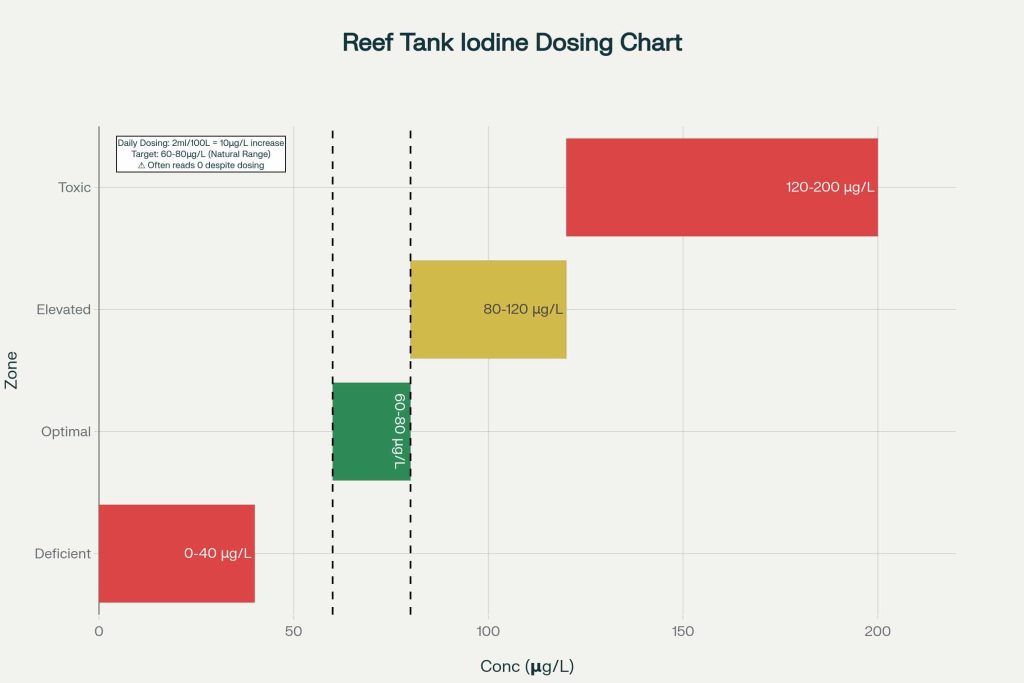
Iodine represents one of the most critical yet rapidly depleted trace elements in reef aquarium systems, existing at natural seawater concentrations of 60-80 μg/L while serving essential functions in coral physiology and stress management. Despite its fundamental importance for oxygen detoxification and coral health, iodine levels frequently read as “zero” on test kits even with daily supplementation, making it one of the most challenging elements to maintain in closed systems.
Understanding Iodine’s Critical Role in Marine Chemistry
Natural Seawater Concentrations and Chemical Forms
Iodine occurs naturally in seawater at concentrations of 60-80 μg/L (0.06-0.08 mg/L), making it a minor but essential element in marine ecosystems. Research indicates that natural seawater contains approximately 400 nM total dissolved iodine, with iodide (I⁻) representing about 88 nM and iodate (IO₃⁻) comprising 293 nM. The remaining fraction consists of dissolved organic iodine compounds (DOI) at approximately 16 nM, which can vary seasonally and geographically.
Studies of coastal waters reveal significant temporal variation in iodine speciation, with iodide concentrations ranging from 61-149 nM and iodate from 198-382 nM depending on biological activity and seasonal cycles. This natural variability reflects the dynamic biogeochemical cycling of iodine, driven primarily by biological processes rather than simple chemical equilibrium. The predominant forms in seawater include iodide (most bioavailable), iodate (stable but less readily utilized), and various organic iodine compounds that contribute to long-term iodine cycling.
Biogeochemical Cycling and Biological Transformations
Iodine undergoes complex biogeochemical transformations in marine environments, with seasonal patterns showing iodate reduction during spring and summer phytoplankton activity. Research demonstrates that iodide accumulation occurs from spring through autumn, while winter periods show iodate restoration through oxidative processes. These transformations are mediated primarily by biological activity rather than abiotic chemical processes.
The biological cycling involves multiple pathways including enzymatic reduction of iodate by marine organisms, incorporation into organic compounds, and subsequent release back to the water column. Studies indicate that coastal environments often show enhanced iodine cycling due to higher biological productivity and terrestrial inputs, with some regions experiencing iodine concentrations exceeding oceanic values by 20-100 nM.
Essential Functions in Coral Physiology
Oxygen Detoxification and Zooxanthellae Management
Iodine’s primary function in coral physiology centers on its critical role in detoxifying excess oxygen produced by zooxanthellae during photosynthesis. Under intense lighting conditions, zooxanthellae can produce oxygen at rates exceeding coral tissue tolerance, leading to oxidative stress and tissue damage. Iodine, particularly in the iodide form (I⁻), bonds with excess oxygen to form non-toxic iodate (IO₃⁻), preventing tissue irritation and enabling corals to maintain full polyp extension under high-light conditions.
Research demonstrates that corals and clams appearing to shrivel or close under intense lighting are attempting to shade their zooxanthellae to reduce oxygen production rates. Adequate iodine availability eliminates this defensive response, allowing host organisms to open fully and maximize photosynthetic efficiency. This relationship explains why iodine-deficient systems often show reduced coral expansion and increased light sensitivity.
Tissue Health and Immune Function
Beyond oxygen detoxification, iodine supports coral tissue health through multiple pathways including immune function enhancement and cellular repair mechanisms. Studies indicate that adequate iodine levels contribute to coral resistance against bacterial infections, tissue necrosis, and environmental stressors. The element also plays roles in maintaining tissue structural integrity and supporting the coral’s ability to recover from physical damage.
Research on coral coloration reveals that iodine deficiency manifests as dull, faded colors, particularly in small polyp stony (SPS) corals that rely heavily on zooxanthellae photosynthesis. The restoration of adequate iodine levels often results in rapid improvement in coral coloration, with blues and purples showing the most dramatic enhancement within weeks of supplementation.
Aquarium Applications and Management Protocols
Target Concentrations and Detection Challenges
Reef aquarium iodine levels should be maintained within the 60-80 μg/L range to mirror natural seawater concentrations and support optimal coral physiology. However, iodine management faces unique challenges due to rapid biological consumption and analytical limitations. Even with consistent daily dosing, test kits frequently return “zero” or “undetectable” results, creating confusion for aquarists who expect measurable responses to supplementation.
The disconnect between dosing and detection occurs because iodine consumption by coral tissues, binding to organic matter, and removal by protein skimming often exceeds supplementation rates. Additionally, iodine’s tendency to form complexes with organic compounds and rapid oxidation in oxygenated seawater can convert bioavailable forms into less detectable species. This phenomenon necessitates a management approach based on biological indicators rather than chemical measurements.
Daily Dosing Protocols and Administration
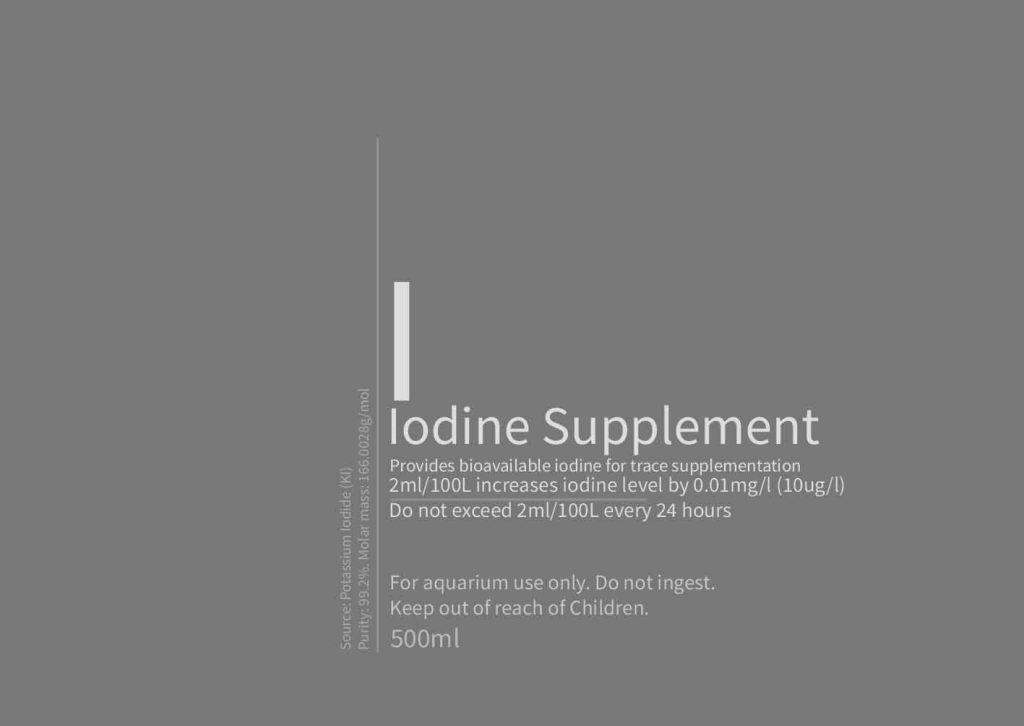
Based on the provided potassium iodide formulation with molecular weight 166.0028 g/mol, the dosing protocol follows these parameters:
- Stock Solution: Potassium Iodide (KI, CAS 7681-11-0)
- Dosing Rate: 2 mL per 100L increases iodine by 0.01 mg/L (10 μg/L)
- Maximum Safe Daily Dose: 2 mL per 100L
- Recommended Range: 60-80 μg/L
- Dosing Frequency: Daily administration required due to rapid consumption
The daily dosing requirement reflects iodine’s rapid incorporation into coral physiology and continuous demand for oxygen detoxification. A typical 400L reef system requires 8 mL of stock solution daily to maintain adequate iodine availability, despite test kits potentially showing undetectable levels. This consistent approach ensures continuous availability for coral physiological processes.
Practical Implementation and Timing Considerations
Iodine supplementation should be administered during periods of peak coral activity, typically during daytime hours when photosynthetic oxygen production is highest. The supplement can be dosed directly into high-flow areas to ensure rapid distribution, though some aquarists prefer dosing into sumps to minimize direct coral contact with concentrated solutions. Many successful reef systems employ automated dosing pumps to deliver consistent small doses throughout the day.
The timing of iodine dosing relative to lighting cycles may influence effectiveness, with some advanced aquarists reporting better results when iodine is available during peak photosynthetic periods. However, the rapid consumption rate means that timing is less critical than consistency, making daily dosing protocols more important than precise scheduling.
Safety Considerations and Toxicity Management
Toxicity Thresholds and Warning Signs
Iodine toxicity represents a significant concern due to the narrow margin between therapeutic and toxic concentrations. Research indicates that iodine becomes toxic to marine invertebrates at concentrations exceeding 80-120 μg/L, with sensitive species showing stress responses at levels only slightly above natural seawater concentrations. Crustaceans, particularly crabs and shrimp, demonstrate extreme sensitivity to iodine excess, often serving as early warning indicators of overdosing.
Studies on coral responses to elevated iodine reveal that concentrations above 120 μg/L can cause tissue darkening, polyp retraction, and increased algae growth. SPS corals typically show the first signs of iodine toxicity through reduced coloration and growth stagnation, while soft corals may exhibit tissue recession and poor polyp extension. The rapid onset of toxicity symptoms emphasizes the importance of conservative dosing approaches.
Chemical Forms and Safety Profiles
Different iodine supplements present varying safety profiles and potency levels. Standard potassium iodide solutions, like the user’s formulation, provide moderate iodine concentrations suitable for regular aquarium use with minimal toxicity risk when properly dosed. These solutions typically increase iodine by 5-15 μg/L per mL, making overdosing less likely through normal usage errors.
Lugol’s solution represents an extreme case, containing highly concentrated iodine/iodide mixtures that can increase aquarium iodine by nearly 900 μg/L per mL. This concentration makes Lugol’s suitable only for advanced aquarists with extensive experience and precise dosing equipment. The medicinal-grade concentration intended for disinfection can quickly reach toxic levels in aquarium applications.
Emergency Protocols and Overdose Management
Iodine overdose requires immediate intervention due to the rapid onset of toxic effects. Initial signs include coral darkening (particularly in SPS species), increased algae growth on glass surfaces, and behavioral changes in invertebrates. Advanced toxicity manifests as coral tissue recession, invertebrate mortality, and system-wide stress responses.
Emergency protocols involve immediate cessation of iodine dosing combined with enhanced protein skimming and activated carbon filtration. Water changes provide limited relief due to iodine’s rapid binding to organic compounds, making chemical removal methods more effective. Recovery typically requires several weeks of conservative management with biological indicators guiding the resumption of supplementation.
Integration with Comprehensive Reef Management
Relationship to Lighting and Photosynthetic Activity
Iodine requirements directly correlate with coral photosynthetic activity and lighting intensity, making supplementation programs dependent on aquarium lighting configurations. Systems with high-intensity LED arrays or metal halide lighting typically exhibit higher iodine consumption rates due to increased zooxanthellae activity and oxygen production. Research indicates that coral iodine demand can increase by 50-100% under intense lighting compared to moderate illumination.
The relationship extends to photoperiod duration, with extended lighting periods potentially requiring increased iodine supplementation to maintain coral health. Some advanced systems employ variable iodine dosing that correlates with lighting intensity, providing higher doses during peak photosynthetic periods. This approach requires careful monitoring and adjustment based on individual system responses.
Protein Skimming and Filtration Interactions
Iodine management becomes complicated by interactions with common reef aquarium filtration systems. Protein skimmers remove iodine-bound organic compounds from the water column, effectively reducing bioavailable iodine concentrations. Heavy skimming can increase iodine demand by 20-40%, requiring adjusted dosing protocols to maintain adequate levels.
Activated carbon filtration presents another significant iodine removal pathway, with fresh carbon capable of removing substantial quantities of dissolved iodine. Systems employing continuous carbon filtration may require doubled iodine dosing rates to compensate for chemical removal. The timing of carbon replacement relative to iodine supplementation can influence system stability and coral responses.
Advanced Applications and Specialized Protocols
Species-Specific Requirements and Responses
Different coral species demonstrate varying iodine requirements and consumption rates, with SPS corals typically showing the highest demand due to active zooxanthellae populations and rapid growth. Acropora species, in particular, benefit dramatically from consistent iodine supplementation, often showing improved coloration and growth within 2-3 weeks of initiating protocols.
Soft corals, including gorgonians and leather corals, also require adequate iodine for tissue health but typically show less dramatic responses to supplementation. Large polyp stony (LPS) corals fall between SPS and soft corals in their iodine requirements, with feeding responses often improving before visual coloration changes become apparent.
Coral Dipping and Therapeutic Applications
Beyond system-wide supplementation, iodine solutions serve therapeutic purposes in coral dipping protocols for parasite and bacterial control. Concentrated iodine solutions can eliminate various coral pests including flatworms, bacterial infections, and tissue necrosis when used as short-term dips. The antiseptic properties of iodine make it valuable for treating newly acquired corals and managing coral diseases.
Coral dipping protocols typically employ higher iodine concentrations (200-500 μg/L) for 5-15 minute exposures, depending on coral sensitivity and treatment objectives. These therapeutic applications require careful monitoring and should be performed by experienced aquarists familiar with coral stress responses.
Monitoring and Troubleshooting
Biological Assessment Methods
Given the limitations of chemical testing for iodine monitoring, reef aquarists must rely on biological indicators to assess supplementation effectiveness. Improved coral coloration, particularly enhanced blues and purples, typically manifests within 1-3 weeks of adequate iodine supplementation. Enhanced polyp extension and feeding responses often precede visible coloration changes, providing early indicators of successful supplementation.
Macroalgae health serves as another valuable assessment tool, with Chaetomorpha and other common species showing improved growth and coloration under adequate iodine levels. Conversely, dying or yellowing macroalgae may indicate iodine deficiency, particularly when other parameters appear optimal.
Deficiency Symptoms and Corrective Actions
Iodine deficiency symptoms in reef aquariums develop gradually but can become severe if left unaddressed. Early signs include reduced coral coloration, particularly fading of blue and purple pigments in SPS species. Progressive deficiency leads to poor polyp extension, increased light sensitivity, and reduced growth rates despite optimal major element parameters.
Advanced deficiency manifests as increased susceptibility to coral diseases, tissue recession, and poor recovery from physical damage. Invertebrates may show molting difficulties, with crabs and shrimp experiencing deformed exoskeletons or failed molting attempts. The rapid response typically seen with iodine supplementation helps distinguish iodine-related issues from other deficiencies.
Troubleshooting Persistent Low Readings
When test kits consistently show zero or undetectable iodine despite regular supplementation, several factors may be responsible. High bioload systems with dense coral populations may consume iodine faster than standard supplementation can replace it, requiring increased dosing rates. Aggressive protein skimming or frequent activated carbon use may remove iodine before coral uptake can occur.
Water testing limitations also contribute to detection problems, as many test kits lack sensitivity for accurate measurement at natural seawater concentrations. Some aquarists find success with professional laboratory analysis or ICP testing to verify actual iodine levels, though biological indicators often provide more practical guidance for day-to-day management.
Conclusion and Best Practices
Iodine supplementation in reef aquariums requires understanding both its critical physiological functions and the practical challenges of maintaining adequate levels in closed systems. The element’s essential role in oxygen detoxification makes it indispensable for coral health under artificial lighting conditions, while its rapid consumption necessitates consistent daily dosing regardless of test kit readings.
Success with iodine supplementation depends on recognizing that biological indicators often provide more reliable guidance than chemical testing. The dramatic improvements in coral coloration, growth, and health that follow adequate iodine supplementation make it one of the most rewarding trace elements to master. However, the narrow margin between beneficial and toxic concentrations demands respect for conservative dosing protocols and careful monitoring of coral responses.
The growing understanding of iodine’s role in coral physiology continues to refine supplementation protocols and assessment methods. As research reveals more about the complex interactions between lighting, photosynthesis, and trace element requirements, iodine management will likely become even more precisely targeted. Nevertheless, the fundamental principles of daily dosing, biological monitoring, and conservative safety margins will remain central to successful iodine supplementation in reef aquariums.